Mediterranean kitchen decorating guide
How to Style Heirloom Tomato Kitchen Wall Art
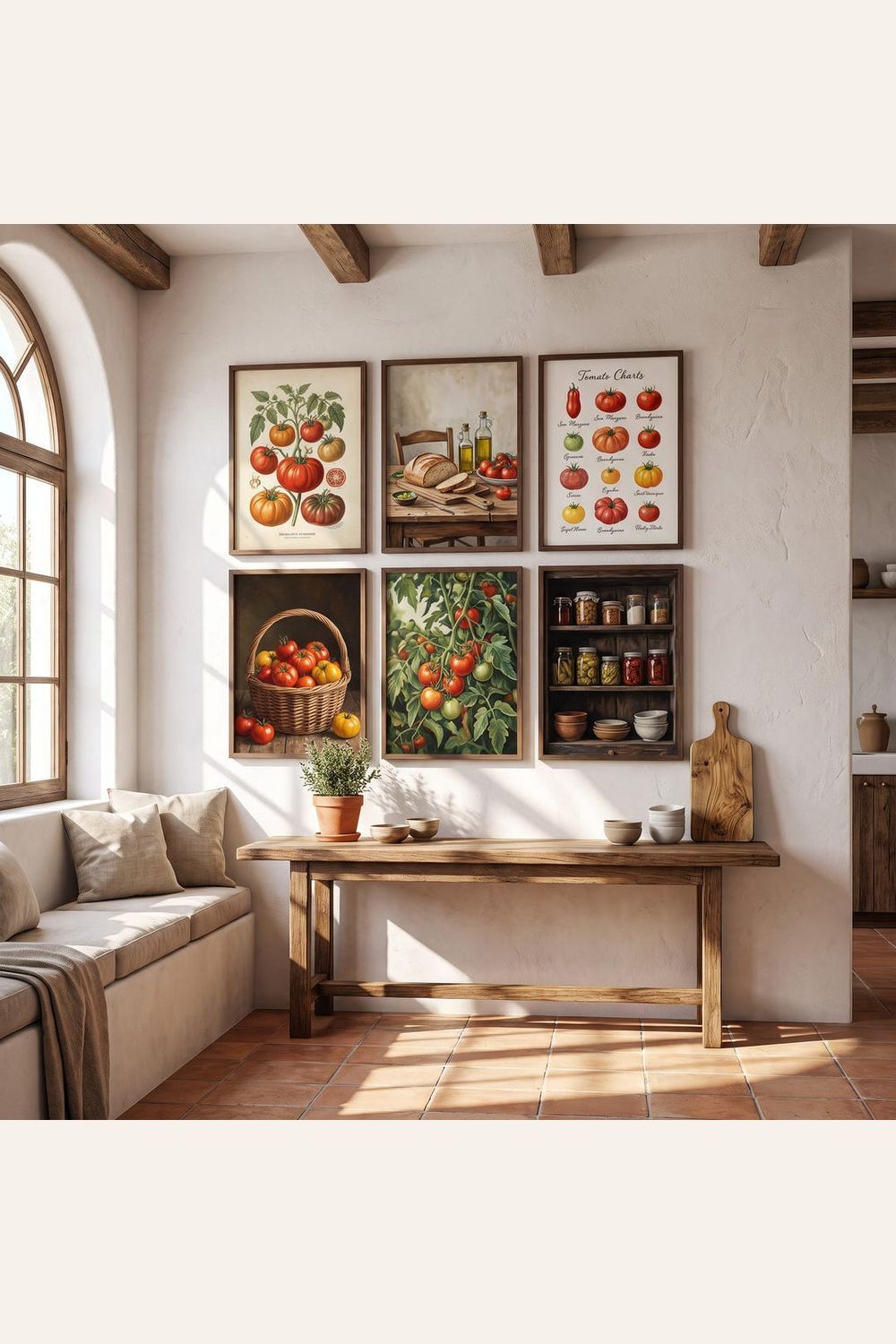
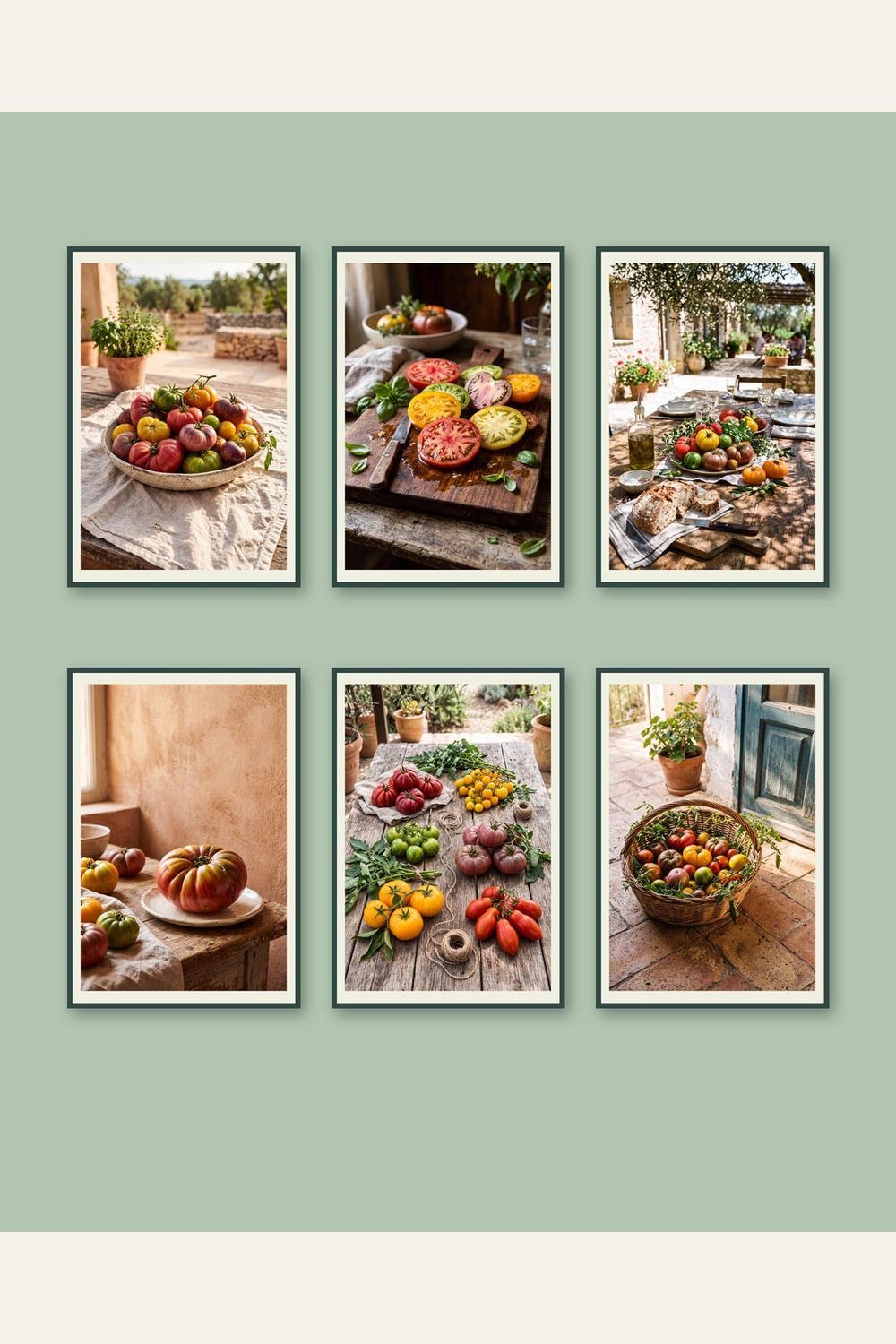
Heirloom tomato artwork brings the market colors of late summer into a kitchen without relying on generic signs or slogans. Ribbed tomatoes, botanical stems, rustic baskets, and sun-warmed reds can make a breakfast nook or pantry feel collected and lived in. A coordinated six-print set is especially useful when a blank wall needs more presence than one small picture, but the room still needs to function as a place for cooking and gathering.
The strongest result comes from treating the collection as part of the kitchen's architecture. Decide where people naturally pause, choose a layout that respects cabinets and counters, and repeat only a few colors from the artwork. The prints should create a focal point—not compete with every jar, towel, and utensil in the room.
Choose a useful wall before choosing frames
Look first at walls above a breakfast bench, low sideboard, pantry console, or dining table. These locations offer a stable visual anchor and usually keep framed paper away from direct food preparation. A narrow wall beside a pantry door can also work if the door swing and traffic path leave enough clearance. Avoid positions immediately above a sink, stovetop, kettle, or other source of steam, grease, heat, and splashes.
Make six paper templates at the intended finished size and tape them to the wall. Check the group from the doorway, seated at the table, and from the main work area. Open nearby cabinet and pantry doors. The outer edge of the gallery should feel related to the furniture below it, and no frame should sit where a shoulder, door, or carried grocery bag will regularly strike it.
Pick a six-print layout for the room
The market grid
A two-by-three grid is the most dependable arrangement above a sideboard, bench, or rectangular table. Equal gaps and aligned outside edges make varied tomato shapes and colors feel like one collection. Center the entire group on the furniture beneath it rather than automatically centering it on the wall.
The pantry stack
Three rows of two suit a taller, narrower wall. This format works well near a pantry entrance or coffee station because it creates impact without extending over switches or cabinet doors. Keep the midpoint of the complete group near comfortable standing eye level, then adjust for the nearby furniture.
Two produce trios
Split the set into two horizontal rows of three when a shelf, doorway, or small window creates a natural center. Repeat the same spacing and frame finish in both trios so they still read as a set. This arrangement can also balance two sides of a long breakfast nook without filling every inch of wall.
Build a Mediterranean pantry palette
Tomato red is vivid, so it needs quieter companions. Warm white or limewash-style walls let the artwork carry the strongest color. Olive green, dusty sage, terracotta, muted mustard, faded blue, and natural wood can repeat secondary tones. Black or aged-brass hardware adds structure without requiring more decorative objects.
Choose two supporting colors at most. For example, repeat olive in a plant pot and linen towel, then use terracotta in one bowl or lamp base. The room does not need tomato-shaped accessories. Everyday materials—wood cutting boards, woven baskets, stoneware, and linen—create a more convincing market-kitchen atmosphere than a shelf full of themed ornaments.
Match the frame to the kitchen
Natural oak or maple frames keep the gallery light and work with butcher block, rattan, and cream cabinetry. Medium walnut adds the warmth of an old pantry or farmhouse table. Slim black frames create a cleaner contemporary edge, while an antique-brass tone can suit a more formal Mediterranean dining corner. Use one finish across all six pieces; the produce imagery already provides enough variation.
Matte or low-reflection glazing is helpful near windows and pendant lights. A warm-white mat can separate saturated artwork from dark paint or patterned tile. If the room is small, a light mat and slim frame prevent the six-piece group from feeling heavy. Test one complete framed print in the actual light before buying all six frames.
Choose scale from the normal viewing distance
Small prints can work in a pantry where viewers stand close. Across a kitchen dining area, larger prints help the tomato forms remain legible. Measure the available wall and subtract the spaces between frames before choosing a size. Leave visible wall around the outer edge so the gallery does not appear wedged between cabinetry and ceiling.
Select a supplied file whose aspect ratio matches the frame or mat opening. Do not stretch an image to fill a different shape. Printer interfaces often default to “fill,” which may crop the edges; inspect the preview and choose the correct paper orientation. The linked Etsy listing remains the source of truth for the current included sizes and files.
Proof one print before ordering the full gallery
Print one design at the intended size on inexpensive paper first. Check whether the red and green tones remain distinct, pale highlights preserve detail, and dark areas do not merge. View the proof in morning and evening kitchen light. If it looks too cool or overly saturated, compare another printer or paper rather than editing every file independently.
Matte art paper usually reduces glare and gives botanical food imagery a natural finish. A lightly textured stock can add warmth, but a strong texture may soften small details. For ratio and paper guidance, use the printable wall art printing guide. After purchase, the digital download help guide explains file access and common Etsy download steps.
Compare nearby kitchen-art directions
Heirloom tomato art feels earthy and produce-led. For a brighter diner palette, compare the retro cherry kitchen wall art guide. For a coastal pantry mood, see the tinned sardine kitchen wall art guide. If you are still deciding how much wall space a six-print collection needs, start with the gallery wall planning guide.
View the Heirloom Tomato Kitchen Print Set on Etsy
Digital download only. No physical prints, frames, tomatoes, produce, furniture, or kitchen accessories are shipped. The linked Etsy listing is the source of truth for current files, sizes, price, license, and availability.
Heirloom tomato kitchen wall art FAQ
Is this a physical set of framed kitchen prints?
No. The featured Etsy product is delivered as digital files. You arrange printing and framing; no physical item is mailed.
Where should tomato prints go in a working kitchen?
Choose a dining wall, breakfast nook, pantry wall, or space above closed storage. Keep framed paper art away from steam, grease, direct heat, and water. Test cabinet and door clearance before hanging anything.
What layout works for a set of six?
A two-by-three grid is versatile over wide furniture. Three rows of two fit a narrow pantry wall, while two coordinated horizontal trios can work around an architectural feature. Use equal gaps and one frame finish.
How do I keep red kitchen art from overwhelming the room?
Let the gallery provide most of the red. Pair it with warm neutrals, olive or sage, natural wood, and one terracotta or mustard accent. Leave clear wall around the group and keep nearby accessories simple.