Marine-biology decorating guide
Deep Sea Creatures Gallery Wall: Build a Dark Ocean Display
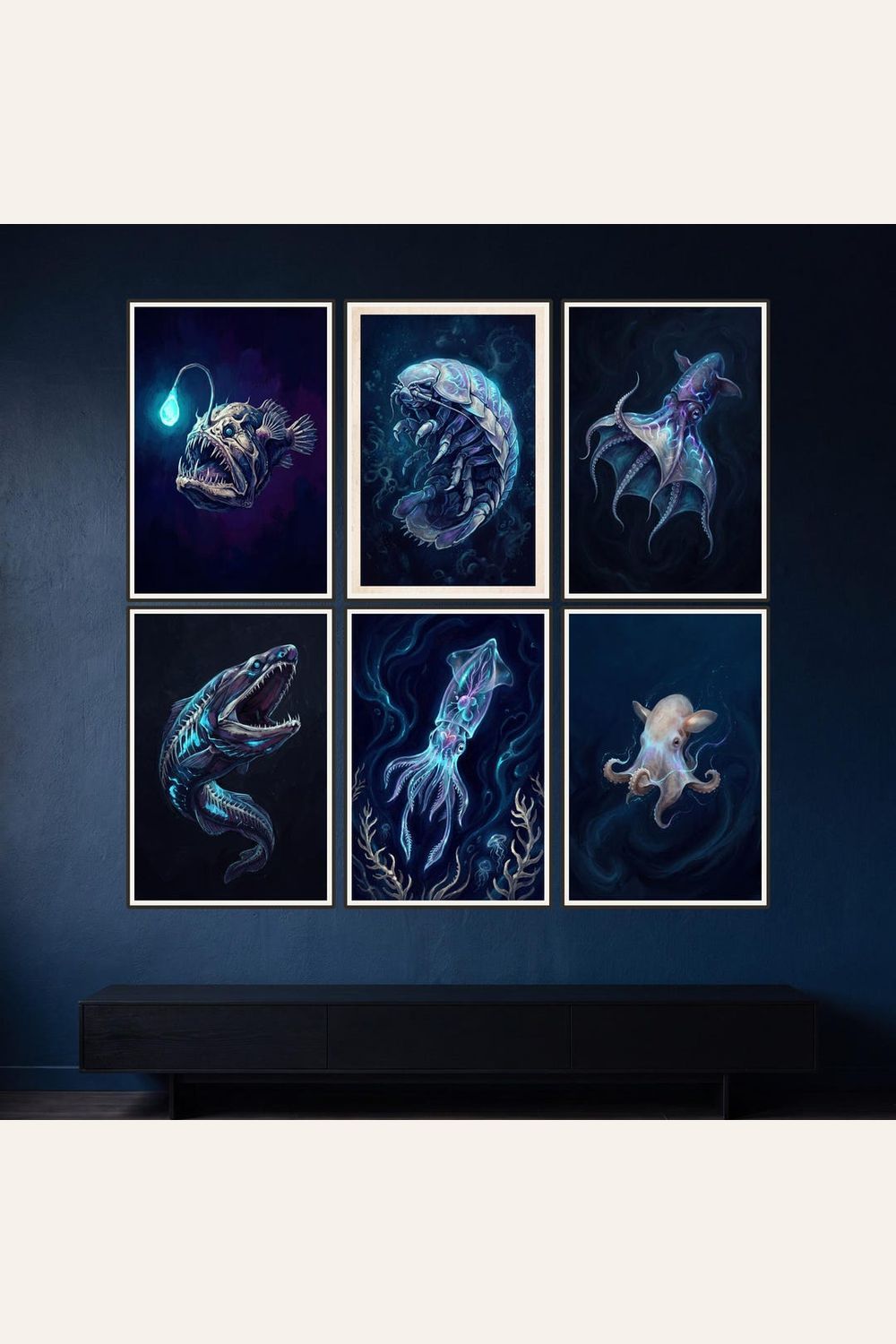
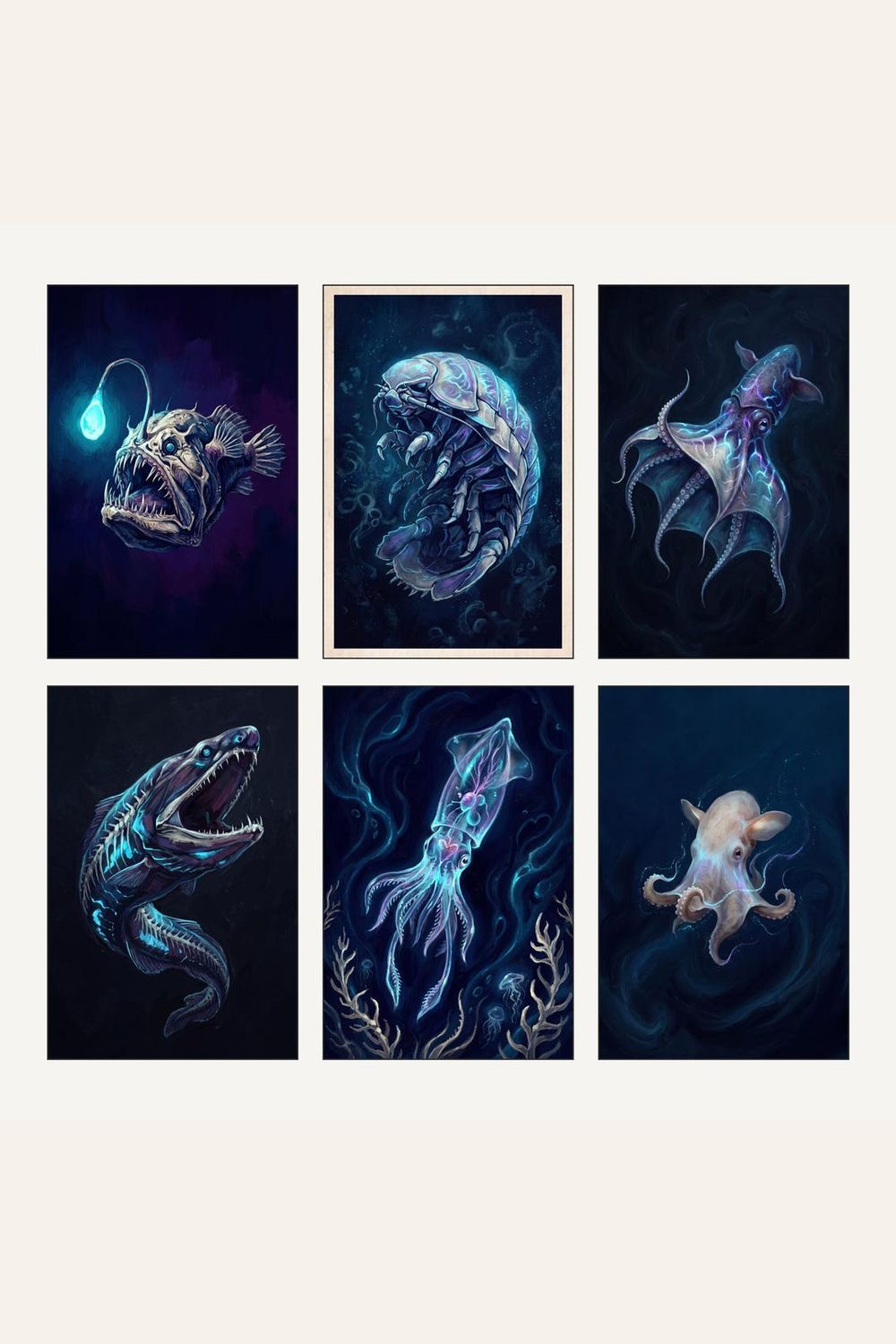
Deep-ocean imagery can make a room feel exploratory rather than merely nautical. Instead of anchors and beach signs, an abyssal gallery uses unfamiliar silhouettes, muted water tones, and natural-history detail to suggest the part of the ocean beyond ordinary daylight. Six coordinated prints are especially useful: they can read like a collected field study while one repeated frame finish prevents the wall from becoming visually chaotic.
Choose a room where close looking makes sense
Dark marine art rewards a viewing position where people can pause. A study, reading corner, science classroom, aquarium room, home office, or older child’s bedroom gives small creature details a reason to be examined. A dry powder room can also work, but avoid walls exposed to shower steam, splashes, or persistent condensation. In every room, keep paper away from direct sunlight and place frames beyond the reach of doors, chair backs, and active equipment.
- Above a desk or credenza: center a two-row, three-column grid on the furniture rather than the full wall.
- Beside a bookcase or aquarium: use two columns of three, leaving a clear margin so the art does not visually merge with shelves, cables, or tank equipment.
- Across a long study wall: use a single level sequence only when all six frames fit with generous outer margins and readable spacing.
Test the complete footprint with paper templates cut to the outside frame dimensions. Include every gap and mat, then inspect the mock layout from the doorway and from the main seat. This catches a common mistake: choosing a print size that fits individually but creates a six-piece arrangement too wide for the furniture or too small for the wall.
Create depth without making the room gloomy
Let the prints supply most of the dark drama. On a pale wall, black or walnut frames create a contained specimen-cabinet effect. On navy, charcoal, or deep green paint, use a pale mat or a narrow light-wood edge so each image remains distinct. Repeat one ocean tone in a lamp base, textile, or book spine rather than filling the room with literal shells, nets, and novelty signs.
Lighting matters more with shadow-rich artwork. Aim a diffuse lamp across the wall instead of placing a harsh spotlight directly above one frame. Matte paper limits reflections, while low-glare glazing can protect prints in busy rooms. Check that every design remains legible during the room’s normal evening lighting, not only in daylight.
Arrange the set like a natural-history collection
A two-by-three grid is the most dependable arrangement because it gives each design equal status. Keep gaps identical and align the outer frame edges precisely. If some creatures appear visually heavier or brighter, distribute them diagonally rather than clustering all high-contrast designs on one side. This creates balance without pretending the designs form a scientific taxonomy.
For a more informal reading corner, a measured salon arrangement can work, but establish one invisible center line and preserve consistent breathing room. Avoid adding labels that claim species identifications unless those identifications are verified. The collection is decorative marine artwork, and the room can celebrate curiosity without presenting fictional imagery as a scientific plate.
Match the digital file to the frame opening
Measure the intended opening, including any mat, before ordering a print. Select the supplied file prepared for that aspect ratio rather than stretching an image. If a printer shows a crop preview, examine every edge and move to a matching ratio when important details are removed. Print one test design first to evaluate dark tones: blocked shadows can hide detail, while excessive brightness can flatten the underwater atmosphere.
Use the printable wall-art guide for aspect-ratio, paper, home-printer, and print-service guidance. Once the test looks right, use the same printer, paper, finish, and color settings for all six pieces so the gallery remains coherent.
A coordinated six-print deep-ocean option
The active Deep Sea Creatures collection combines six abyssal and marine natural-history designs for a study, office, classroom, reading nook, bedroom, or dark-ocean gallery. The Etsy listing currently describes 72 high-resolution JPG files across 12 print sizes, delivered digitally in ZIP archives; consult the live listing for the current price, availability, and exact included files.
View the active Deep Sea Creatures art set on Etsy
Seller disclosure: This link opens JTNPrintableCo’s Etsy listing. JTNPrintableCo is the seller and may receive revenue from purchases. Etsy handles checkout and digital delivery; the Etsy listing is the source of truth for current price, availability, and included files.
Understand the digital delivery before buying
This is a digital-download-only product. No physical poster, print, frame, mat, aquarium accessory, or other object is shipped. After Etsy confirms payment, use a web browser to access the files, extract the ZIP archives, choose the file prepared for the intended dimensions, and print at home or through a print service. See the digital-download help page for file access and extraction guidance.
Deep sea gallery wall FAQ
Where does deep-sea creature wall art work best?
It suits a marine-biology office, study, classroom, reading corner, aquarium room, older child’s bedroom, or dry powder room. Choose a wall where details can be viewed closely and protected from persistent moisture or direct sun.
How should six dark-ocean prints be arranged?
A two-by-three grid gives the clearest collected rhythm. Two columns of three fit a narrow wall, while a horizontal sequence needs a long credenza and ample margins. Repeat the frames and gaps.
Are physical deep-sea posters shipped?
No. The linked Etsy collection is a digital download; the buyer downloads files and arranges printing.
Which frames suit dark marine wall art?
Black frames preserve the abyssal mood, walnut adds natural-history warmth, and pale mats separate the artwork from a dark painted wall.
Connect the theme to the rest of the room
Use restrained supporting objects: a marine field guide, a textured blue throw, or one sculptural lamp is enough. Keep practical surfaces clear and let the six-print collection carry the subject. For another science-led direction, compare the fossil and paleontology guide; for a brighter aquatic room, visit the tropical aquarium guide. Browse more coordinated subjects in the gallery-wall collection.